
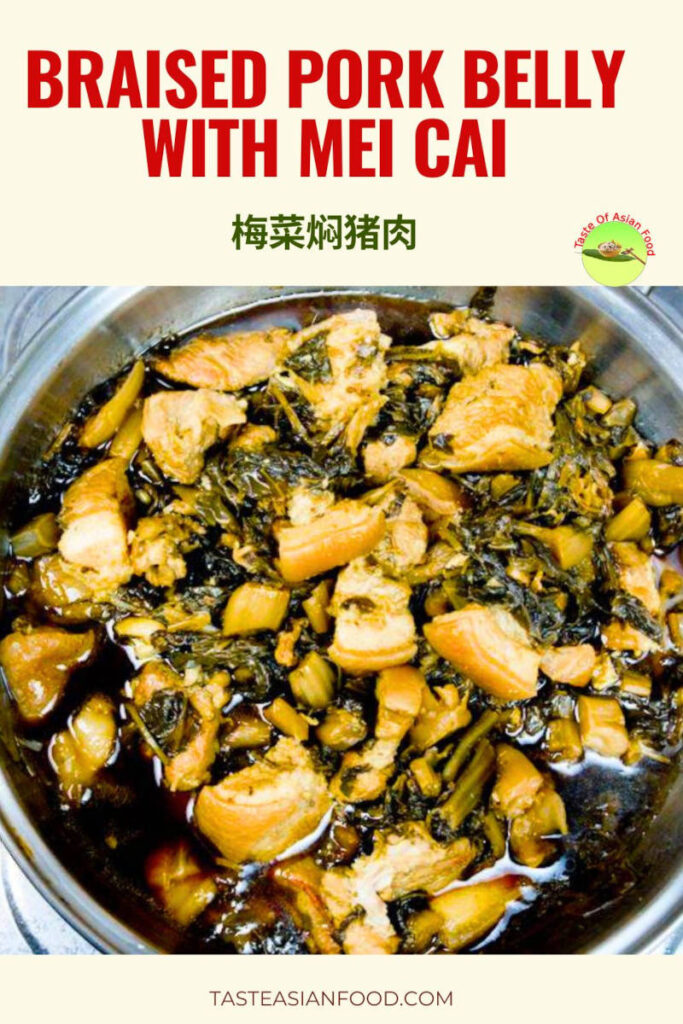
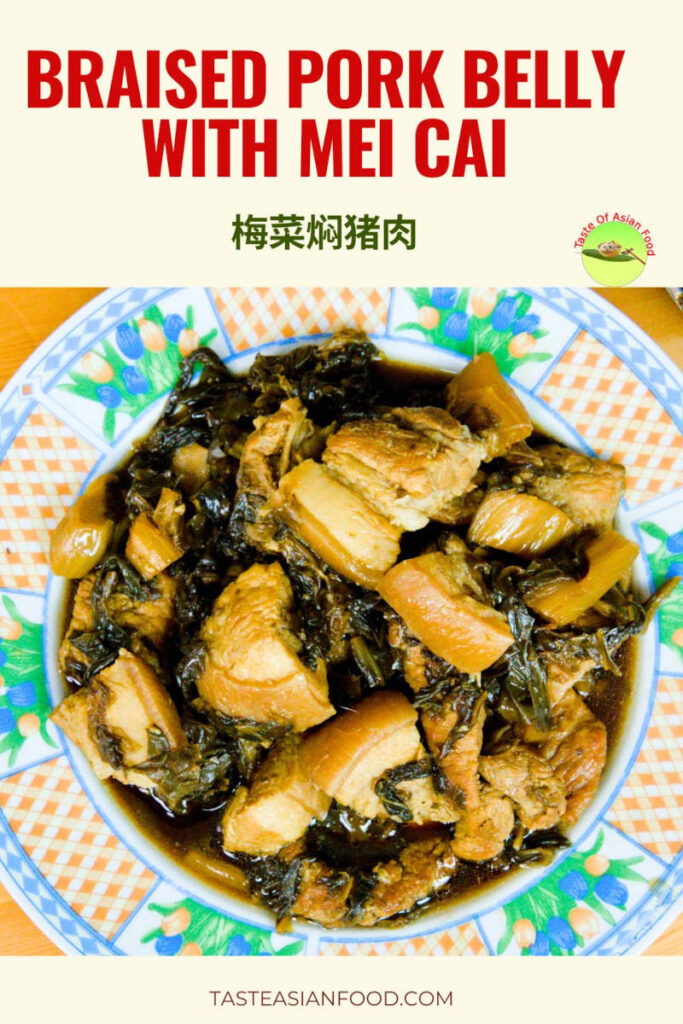
I am happy to share with you an easy Chinese braised pork belly with preserved vegetables, Mei Cai Pork Belly (梅菜焖猪肉). This recipe is a specialty from my wife, who is Hakka, so it comes from an authentic Hakka cuisine tradition.
The preserved mustard greens (Mei Cai) are packed with natural umami and are ideal for braised dishes. During the slow cooking process, the pork belly absorbs all the rich flavors from the Mei Cai, resulting in tender, flavorful, and deeply satisfying pork.
The cooking method is very forgiving, yet it still delivers bold flavor without requiring a long list of ingredients.
Content
Note: Click any item to jump straight to that part of the post.
- What Is Mei Cai? (Chinese Preserved Mustard Greens)
- Why This Recipe Works
- Step-by-Step Instructions
- Tips for the Best Mei Cai Pork Belly
- Frequently Asked Questions
- What to Serve with Mei Cai Braised Pork Belly
Note: This post may contain affiliate links. Please read my privacy policy for more info. I may receive commissions for purchases made through links in this post. As an Amazon Associate, I earn from qualifying purchases.
What Is Mei Cai? (Chinese Preserved Mustard Greens)
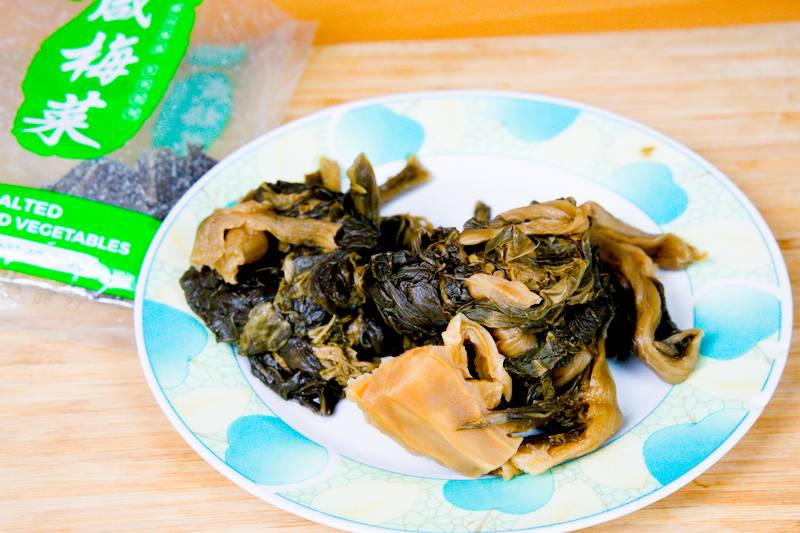
Mei Cai 梅菜 is a type of Chinese preserved mustard greens. To make Mei Cai, fresh mustard greens are sun-dried, salted, packed into barrels under a heavy weight, and left to ferment for weeks. The process is repeated several times. For the sweet variety, sugar is added during the final stage.
The result is a dark, wrinkled, intensely savory vegetable that keeps for months without refrigeration. There are two main types. Salty Mei Cai brings a deep umami punch. Sweet Mei Cai adds a gentle background sweetness. Both are sold in vacuum-sealed bags at Chinese grocery stores. Some wet markets sell them loose.
Why This Recipe Works
Pork Belly
Pork belly has the perfect balance of meat and fat. As it braises slowly, the fat renders out, and the meat turns tender enough to pull apart. This is why the pork belly recipe using preserved mustard greens always turns out so satisfying.
Salty and Sweet Preserved Mustard Greens (咸梅菜和甜梅菜)
Using both types together is the real secret. The salty one brings a deep savory umami, while the sweet one adds a gentle background sweetness. Together, they create a complete flavor profile without the need for much additional seasoning.
Minimal Seasoning
Since the preserved mustard greens already carry saltiness, sweetness, and umami, you only need a tiny bit of dark soy sauce for color and a small amount of sugar and light soy sauce. No long list of spices. No complicated sauce mix. The preserved vegetables do all the hard work for you.
Step-by-Step Instructions
1. Prepare the Preserved Vegetables
- Wash. Separating the preserved mustard greens. They usually have a heavy layer of salt on the surface, so they need thorough washing. Rinse them under running water or in a bowl of water, rubbing gently to remove as much surface salt as possible. Repeat this process three to four times, changing the water each time until it runs clear.
- Cut. After washing, cut them into short sections, about the length of a fingertip. If the stems feel fibrous, trim off and discard those parts, as they will not soften properly during cooking.
- Soak. Soak the mei cai in a pot of water to draw out the excess salt. Let it sit for one to two hours, depending on how salty you want it. If you are short on time, use hot water instead. That will cut the time down to about 30 minutes. The easiest way to tell if it is ready is to taste a small piece. Once the saltiness is what you like, it is good to go. Once soaked, squeeze them firmly to remove as much water as possible.
- Dry Fry. Place a pan over low heat without adding any oil. Add the preserved mustard greens and keep stirring. This helps dry them out further. As the moisture cooks off, the heat in the pan will gradually rise, and the vegetables will give off a rich, fragrant aroma.
2. Sear the Pork Belly
- Use pork belly with the skin on for the best texture. Cut it into even 2cm thick slices so they cook uniformly. Pat the pork dry with a paper towel to ensure proper browning during searing.
- Heat oil in the pan over medium heat. Place the pork pieces in a single layer without overcrowding. Sear both sides until lightly browned. This step enhances the flavor and gives the pork a better texture after braising.
3. Combine Ingredients
- Once the pork has developed some color, add smashed garlic cloves to the pan. Stir and cook together with the pork for about 30 seconds, just until the garlic becomes fragrant.
- Return the prepared preserved vegetables to the pan with the pork and garlic. Mix everything evenly so the vegetables are well distributed among the pork.
- Pour in enough hot water to cover the pork and preserved vegetables.
- Add light soy sauce, dark soy sauce, and a small amount of sugar to balance the flavor. If you like, you can also add a bit of oyster sauce, but this is optional.
4. Braise Gently
- Turn the heat up and bring everything to a boil. Once boiling, reduce the heat to a very gentle simmer. Let the pork braise slowly until it becomes tender.
- During this time, open the lid occasionally to stir, ensuring even cooking, and check the liquid level occasionally. Make sure the pork remains submerged and add more hot water if needed.
- After about 45 minutes of braising, check the pork for tenderness and give the sauce a taste. Adjust the seasoning if needed. If the pork is not quite soft enough, continue to braise until it reaches the desired texture.
- If there is too much liquid, remove the lid and continue simmering to reduce the sauce. Do not let it dry out completely, as it is best served with some sauce, which goes perfectly with rice.
- Serve hot with steamed rice for a comforting and satisfying meal.
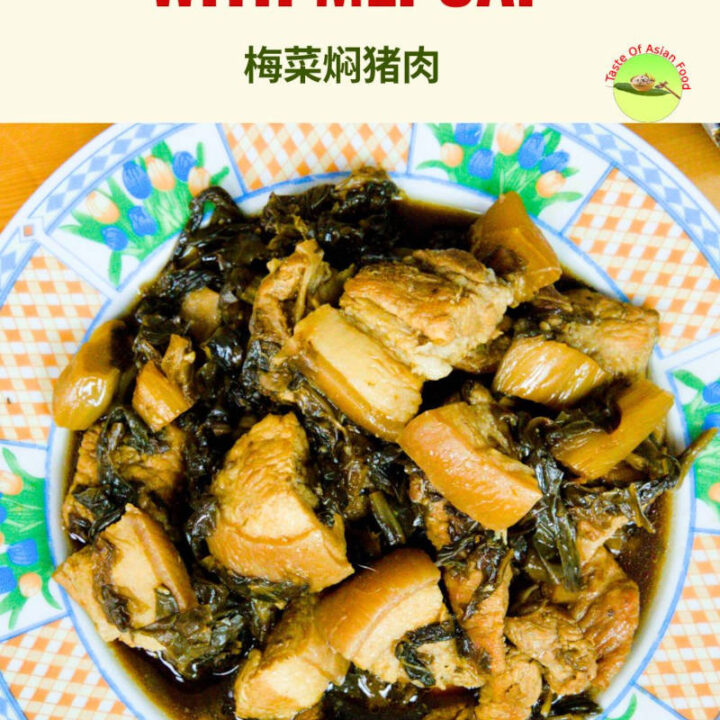
Braised Pork Belly with Mei Cai (Preserved Mustard Greens)
This classic Hakka dish combines melt-in-your-mouth pork belly with salty and sweet Mei Cai. A simple, comforting recipe packed with deep savory flavor.
Ingredients
- 500g pork belly
- 300g sweet preserved mustard greens (sweet Mei Cai)
- 200g salted preserved mustard greens (salty Mei Cai)
- 20g garlic (about 6 cloves, smashed)
- 2 tbsp light soy sauce
- 1 tbsp dark soy sauce
- 1 tsp sugar
- 500–700ml water (enough to cover)
- 2 tbsp cooking oil
Instructions
- Wash vegetables – Rinse salted preserved vegetables several times until the water runs clear.
- Cut and trim – Cut both preserved vegetables into short sections and remove any fibrous stems.
- Soak vegetables – Soak in water (or hot water to speed up) until the desired saltiness is reached. Drain and squeeze dry.
- Dry fry – Cook preserved vegetables in a dry pan over low heat until fragrant. Remove and set aside.
- Prepare pork – Cut pork belly into pieces and pat dry.
- Sear pork – Heat oil and sear pork until lightly browned on both sides.
- Add garlic – Add smashed garlic and stir briefly until fragrant.
- Combine – Return preserved vegetables to the pan and mix well.
- Add seasoning – Pour in water to cover, then add light soy sauce, dark soy sauce, and sugar.
- Braise – Bring to a boil, then reduce to a gentle simmer for about 45 minutes until tender.
- Reduce sauce – Simmer uncovered if needed to thicken slightly, keeping some sauce for serving.
- Serve – Rest briefly, then serve hot with rice.
Recommended Products
As an Amazon Associate and member of other affiliate programs, I earn from qualifying purchases.
-
![Enther Meal Prep Containers [20 Pack] Single 1 Compartment with Lids, Food Storage Bento Box | BPA Free | Stackable | Reusable Lunch Boxes, Microwave/Dishwasher/Freezer Safe,Portion Control (28 oz)](https://capital-scan.live/wp-content/uploads/2019/06/71oizUojyDL._SY355_-200x200.jpg)
![Enther Meal Prep Containers [20 Pack] Single 1 Compartment with Lids, Food Storage Bento Box | BPA Free | Stackable | Reusable Lunch Boxes, Microwave/Dishwasher/Freezer Safe,Portion Control (28 oz)](https://capital-scan.live/wp-content/uploads/2019/06/71oizUojyDL._SY355_-200x200.jpg.webp) Enther Meal Prep Containers [20 Pack] Single 1 Compartment with Lids, Food Storage Bento Box | BPA Free | Stackable | Reusable Lunch Boxes, Microwave/Dishwasher/Freezer Safe,Portion Control (28 oz)
Enther Meal Prep Containers [20 Pack] Single 1 Compartment with Lids, Food Storage Bento Box | BPA Free | Stackable | Reusable Lunch Boxes, Microwave/Dishwasher/Freezer Safe,Portion Control (28 oz) -
 Instant Pot Duo 7-in-1 Electric Pressure Cooker, Slow Cooker, Rice Cooker, Steamer, Sauté, Yogurt Maker, Warmer & Sterilizer, Includes App with Over 800 Recipes, Stainless Steel, 8 Quart
 -
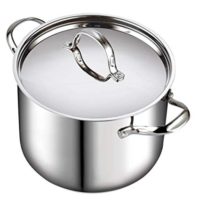
 Cooks Standard 02520 Quart Classic Stainless Steel Stockpot with Lid, 12-QT, Silver
Nutrition Information:
Yield: 3 Serving Size: 1Amount Per Serving: Calories: 1037Total Fat: 98gSaturated Fat: 33gUnsaturated Fat: 66gCholesterol: 120mgSodium: 971mgCarbohydrates: 13gFiber: 6gSugar: 4gProtein: 22g
This data was provided and calculated by Nutritionix on 5/6/2026
Tips for the Best Mei Cai Pork Belly
- Adjust salt to taste. The saltiness of preserved mustard greens can vary by brand. After soaking, always taste a small piece and prolong the soaking time if needed.
- Use hot water to save time. If you are short on time, soaking the preserved vegetables in hot water to shorten the soaking time.
- Dry fry the mei cai. Dry frying the preserved vegetables helps remove any raw fermented aroma and enhances their fragrance.
- Sear for deeper flavor. Take the time to brown the pork properly. The caramelized bits formed during searing will enrich the overall flavor.
- Keep some sauce. Do not cook it down until it is completely dry. Leave some sauce in the pan, as it is full of flavor and goes really well with plain rice.
Frequently Asked Questions
Why is my Mei Cai pork belly so salty?
This usually happens when the preserved vegetables are not soaked enough. Try rinsing several times and soaking for a longer period. Since salt levels vary by brand, always taste a piece after soaking and adjust as needed.
How to make pork belly tender when braising?
Cook it gently over low heat with enough liquid. Slow braising and keeping the pork submerged will help it become soft and tender.
How long should I braise pork belly?
It usually takes about 45 to 60 minutes of gentle simmering until tender. The exact time may vary depending on the size of the pieces.
Can I use other cuts of pork instead of pork belly?
Yes, pork shoulder can be used, but the texture will be less rich. Pork belly is preferred for its balance of meat and fat. Avoid lean cuts as they tend to become dry.
Can I use only one type of preserved mustard greens?
You can, but the flavor will not be as balanced. The salty type adds depth, while the sweet type brings mild sweetness. Using both together gives the best result.
Do I need to add extra salt?
Usually not. The preserved mustard greens already provide enough saltiness. Always taste before adding any extra salt.
Can I make this dish ahead of time?
Yes, and it often tastes better the next day as the flavors develop further.
How to store and reheat the leftovers?
Braised pork belly with mei cai freezes very well. Keep any leftovers in an airtight container in the refrigerator for a day, or place them in the freezer for a longer period.
To reheat, transfer it to a pan, add a splash of water, and warm it over low heat until it is heated through and gently simmering.
How do I adjust the recipe if I use a multicooker?
For a pressure cooker, cook on high pressure for 30 to 35 minutes, then release the pressure naturally. For a slow cooker, cook on low for 3–4 hours or high for 2–3 hours until the pork is tender.
What to Serve with Mei Cai Braised Pork Belly
If you are wondering what to serve with Mei Cai pork belly, here are three great options.
- Cantonese Braised Silken Tofu with Minced Pork. This soft, delicate tofu dish provides a gentle contrast to the bold and fatty pork belly.
- Beef Stir Fry with Ginger and Spring Onions. If you want to add another protein to the table, this quick stir-fry is a great choice.
- Steamed Eggs with Perfect Silky Texture. The mild egg flavor lets the complex taste of the preserved mustard greens shine without competing for attention.
KP
Wednesday 6th of May 2026
Hi, this is KP Kwan. I am happy to see you at this comment area, as you have read through my recipe. I am happy to reply any questions and comments as soon as possible.